

Cybersecurity in 2025 is evolving fast. Early in the year, U.S. organizations faced new threats like AI-driven ransomware, supply chain attacks, and multi-cloud vulnerabilities. To tackle these, several tools launched or updated between January and February 2025. The focus? Better threat detection, faster response times, and addressing cloud misconfigurations.
Key Takeaways:
- Ransomware: Attackers now use triple extortion tactics, targeting backups and critical sectors like healthcare.
- Threat Intelligence: Advanced methods like behavioral analysis and threat hunting are now essential.
- Cloud Security: Misconfigurations and identity management challenges in multi-cloud setups are major risks.
Featured Tools:
- Kunai: Open-source threat-hunting for Linux and containers, with custom detection rules and forensic capabilities.
- Misconfig Mapper: CLI tool to detect and document misconfigurations in services like GitLab and Atlassian.
For professionals, these tools offer ways to improve endpoint protection, detect complex threats, and secure cloud environments. The right mix of established solutions and emerging tools can help organizations stay ahead in a challenging cybersecurity landscape.
Top 10 FREE Cyber Security Tools In 2025 | Best CyberSecurity Tools In 2025 | Simplilearn

Cybersecurity Challenges in Early 2025
The start of 2025 has brought a wave of cybersecurity challenges that are reshaping how the U.S. approaches digital defense. These threats demand immediate action and smarter solutions to protect critical data and ensure businesses can operate without disruption. Below are some of the most pressing issues that have emerged.
Rise in Ransomware Attacks
Ransomware attacks have reached a new level of sophistication in 2025, pushing organizations to rethink their defensive strategies. Cybercriminals are now using artificial intelligence to fine-tune their attacks, making them more precise and harder to defend against. While traditional ransomware relied on encrypting files, attackers have now adopted triple extortion tactics. This means they not only encrypt data but also threaten to release it publicly and pressure victims by targeting their customers and business partners.
Although double extortion remains common, attackers are increasingly zeroing in on critical infrastructure and healthcare systems, where the stakes are high and the potential for disruption is enormous. Additionally, by focusing on cloud-based backups, they’ve rendered many traditional recovery methods ineffective. This shift is forcing organizations to reconsider how they manage and protect their backups.
To make matters worse, ransomware groups are now operating like well-organized enterprises, maintaining long-term access to victims’ networks. These prolonged campaigns give them more opportunities to exploit vulnerabilities and maximize their impact.
Need for Advanced Threat Intelligence
Beyond ransomware, the evolving threat landscape has exposed the limitations of older detection methods. Modern cyberattacks are increasingly complex, requiring proactive threat intelligence to stay ahead of attackers. Many hackers are now using living-off-the-land techniques, which disguise their activities as legitimate system operations, making them harder to detect.
Supply chain attacks have also become more advanced. By compromising software vendors and using their distribution networks, attackers can infiltrate multiple organizations at once. This approach allows them to bypass traditional defenses and gain access to even the most secure environments.
Traditional detection systems, which rely on static signatures, are struggling to keep up with these fast-changing threats. Attackers are constantly adapting, which means organizations need tools that can use behavioral analysis and machine learning to detect unusual activity in real time.
Because of this, threat hunting has shifted from being a nice-to-have to an absolute necessity. Passive security measures alone are no longer enough to counter determined adversaries. Organizations now need tools that can pull together data from various sources, spot subtle warning signs, and provide actionable insights to their response teams. This level of intelligence is critical for enabling proactive defense measures.
Cloud Security Concerns
As businesses adopt multi-cloud environments at a rapid pace, they’re creating new vulnerabilities that many are struggling to secure. Misconfigurations remain one of the most common issues, leaving cloud systems wide open to breaches.
Another growing concern is container security, especially as more organizations embrace DevOps practices and containerized applications. Containers, by design, are temporary and dynamic, which makes traditional security tools less effective. Specialized solutions are needed to monitor container lifecycles and detect threats in these ever-changing environments.
Identity and access management in the cloud has also become more challenging. With the rise of non-human identities, such as service accounts and APIs, attackers are finding new ways to gain long-term access to cloud resources. These breaches often go unnoticed for months, giving attackers plenty of time to steal sensitive data.
The shared responsibility model of cloud computing adds another layer of complexity. Many organizations mistakenly assume their cloud providers handle more security than they actually do, leaving critical areas unprotected. This misunderstanding has led to significant security gaps that attackers are quick to exploit.
Finally, issues like data sovereignty and evolving compliance requirements are making it harder for organizations to manage their cloud security. Companies operating in multiple regions must keep track of where their data is stored and how it’s processed to meet regulatory demands. Without clear visibility and control, they risk falling out of compliance or exposing sensitive information. Addressing these challenges is essential for building a stronger defense against modern threats.
Top Cybersecurity Tools: January-February 2025
Here’s a closer look at two standout cybersecurity tools from early 2025, designed to tackle critical challenges in today’s IT environments.
Kunai
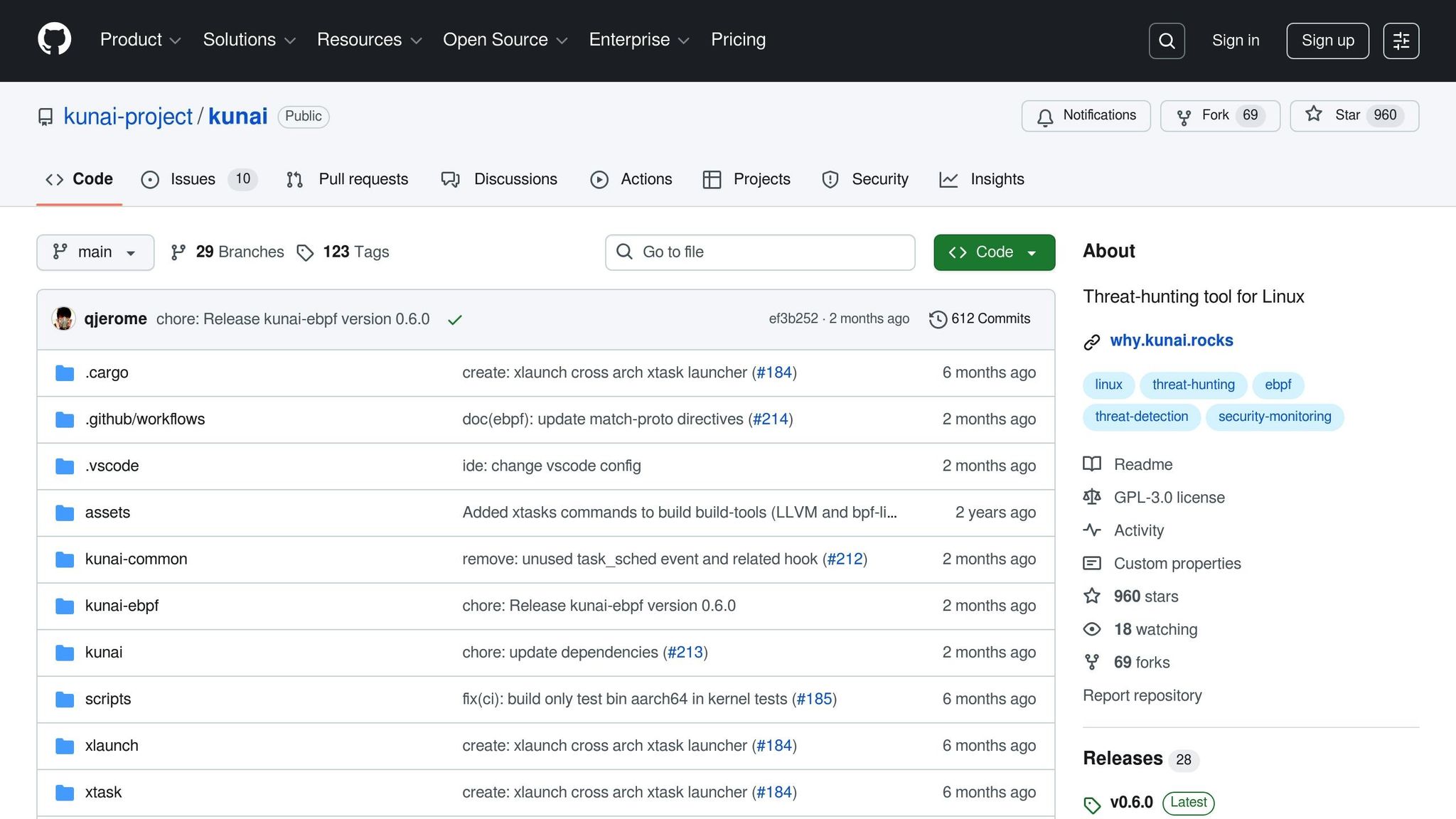
Kunai is an open-source threat-hunting tool tailored for Linux-based, cloud-native environments. It’s designed to cut through the noise by correlating host events, delivering actionable insights, and simplifying log ingestion processes. A key feature is its ability to arrange events chronologically, which is crucial for consistent forensic investigations. For organizations working with containerized applications, Kunai offers container-aware monitoring to track the dynamic activities within containers.
What sets Kunai apart is its open detection rule engine, allowing security teams to create custom detection scenarios. It also integrates seamlessly with tools like YARA for file scanning and MISP for real-time scanning of compromise indicators. For Security Operations Center (SOC) operators and digital forensics teams, Kunai shortens "dwell time" by enabling proactive threat hunting. This means advanced threats can be identified and isolated before they escalate into major incidents. By offering these capabilities, Kunai helps organizations focus their efforts on effective remediation strategies.
Misconfig Mapper
Misconfig Mapper addresses a persistent issue in cybersecurity: misconfigurations. This command-line interface (CLI) tool is particularly valuable for organizations relying on platforms like Atlassian, Jenkins, GitLab, and PHP Laravel frameworks. It works by identifying and cataloging service instances within an organization, then scanning for security misconfigurations that could pose risks.
The tool doesn’t stop at detection. It provides detailed documentation of misconfigurations, enabling teams to systematically test and refine their configurations. By offering a centralized view of vulnerabilities, Misconfig Mapper helps organizations prioritize fixes based on actual risk levels. This makes it a practical solution for teams aiming to stay ahead of potential threats while maintaining a secure IT environment.
sbb-itb-760dc80
How U.S. Professionals Can Use These Tools
The cybersecurity tools introduced in early 2025 bring practical solutions to some of the most pressing challenges faced by American organizations. Here’s how professionals in the U.S. can leverage these tools to strengthen endpoint protection, improve threat detection, and secure cloud environments.
Strengthening Endpoint Protection for Remote Teams
With remote and hybrid work becoming the norm, traditional perimeter-based security approaches no longer cut it. Endpoint security tools designed for distributed teams can provide real-time visibility, allowing organizations to spot unusual activity and respond instantly. Centralized monitoring systems play a key role here, ensuring security measures are both effective and seamless. This is especially important in sectors that operate under strict regulatory oversight, where maintaining compliance is non-negotiable.
Enhancing Threat Detection with Proactive Threat Hunting
Cyberattacks are becoming increasingly complex, making proactive threat hunting a necessity. Modern tools now go beyond reactive alerts, offering advanced monitoring that connects events over time. This reduces the time it takes to identify potential breaches. By blending automated detection systems with targeted human analysis, companies can expand their security operations while addressing the ongoing shortage of skilled cybersecurity professionals.
Protecting Cloud Environments
Managing security in multi-cloud setups is critical. Continuous monitoring of cloud configurations helps catch errors before they lead to breaches. Tools that enforce secure baselines, identify deviations, and implement zero-trust access controls are key to protecting cloud resources. When integrated with SIEM systems, these tools provide even greater visibility, helping organizations stay ahead of potential threats.
Tool Comparison Table
To address the cybersecurity challenges discussed earlier, here’s a comparison of key tools designed to tackle these issues. This table provides a quick overview to help U.S. organizations evaluate which tools align with their needs and budgets. While detailed information on some tools released in early 2025 is still pending, here’s what we know about the solutions available from January and February. This serves as a starting point for understanding how these tools fit into broader cybersecurity strategies.
| Tool | Primary Use Case | Pricing Model | Supported Environments | Best For |
|---|---|---|---|---|
| CrowdStrike Falcon | Endpoint Detection & Response (EDR) | Subscription-based with per-endpoint pricing | Cloud-native solution supporting Windows, macOS, and Linux endpoints | Organizations with remote/hybrid work models and large enterprises |
| Kunai | Details pending | Details pending | Details pending | Details pending |
| BadDNS | Details pending | Details pending | Details pending | Details pending |
| Misconfig Mapper | Details pending | Details pending | Details pending | Details pending |
| Orbit | Details pending | Details pending | Details pending | Details pending |
Among these tools, CrowdStrike Falcon stands out as the most established option, offering clear pricing and a cloud-native architecture compatible with Windows, macOS, and Linux endpoints. Its reputation and enterprise-focused features make it particularly suitable for large organizations and those with remote or hybrid workforces.
The other tools – Kunai, BadDNS, Misconfig Mapper, and Orbit – are emerging solutions designed to address specific cybersecurity gaps. While they may complement established tools like CrowdStrike Falcon, detailed information about their pricing, use cases, and environments is not yet available. For the most up-to-date details, it’s best to reach out to the respective vendors.
For IT operations teams looking for a reliable solution ready for immediate deployment, CrowdStrike Falcon’s proven track record and enterprise packages make it a strong contender.
When selecting cybersecurity tools, don’t forget to account for costs beyond licensing, such as implementation, training, and integration. These factors are crucial for ensuring a seamless fit into your organization’s existing systems. Stay tuned for more insights in the next section, where CyberDetect Pro Blog dives deeper into expert analysis.
CyberDetect Pro Blog Insights
Our analysis sheds light on practical considerations for U.S. organizations navigating the cybersecurity landscape in early 2025. This period presents both hurdles and opportunities, as established solutions continue to yield reliable results while newer, specialized tools signal a shift toward more focused approaches to threat detection and prevention. These trends highlight the need for organizations to revisit their budget priorities when adopting new tools.
Budget allocation plays a pivotal role in cybersecurity planning. Instead of channeling significant funds into a single, all-encompassing platform, many organizations are opting for a layered approach. This strategy blends trusted EDR solutions with emerging specialized tools, striking a balance between robust protection and manageable costs. Such an approach also helps avoid unnecessary complexity.
The timing of tool adoption is another key factor in today’s fast-changing threat environment. Waiting too long for comprehensive feature documentation on tools like Kunai, BadDNS, Misconfig Mapper, and Orbit can leave organizations vulnerable to sophisticated threat actors. On the flip side, rushing into untested solutions without thorough evaluation may inadvertently create security gaps rather than addressing them.
In this evolving threat landscape, integration capabilities should take precedence over individual tool features. Tools that seamlessly integrate with existing systems are far more effective than standalone options. Organizations with strong API management and security orchestration can maximize the value of multiple specialized tools, while those relying on isolated solutions may struggle to keep up.
For SMBs and distributed teams, focusing on the most pressing vulnerabilities and choosing cloud-native solutions can ensure both cost efficiency and consistent performance. Rather than trying to deploy every available tool, prioritize addressing your organization’s most critical weaknesses. Endpoint protection often delivers the highest return on investment, followed by threat intelligence tailored to your industry’s risk profile. For distributed workforces, solutions that perform reliably across diverse network conditions and devices are essential – making cloud-native architectures a more practical choice than on-premises systems.
Finally, successful deployment hinges on training and adoption timelines rather than just technical features. Even the most advanced cybersecurity tools are of little use if your team cannot implement them effectively. Plan for a deployment and training period of 30–60 days to ensure your organization can fully utilize these tools.
FAQs
What makes AI-driven ransomware and triple extortion attacks more dangerous than traditional ransomware, and how can organizations protect themselves?
AI-driven ransomware has changed the game by leveraging artificial intelligence to automate attacks, sidestep detection, and pinpoint vulnerabilities with incredible accuracy and speed. Unlike traditional ransomware, which often relies on basic, manual methods, these attacks are far more advanced and harder to combat. Adding to the complexity is the rise of triple extortion – a tactic that not only encrypts data but also threatens to expose sensitive information and pressures third parties, like customers or partners, to turn up the heat on victims.
To stay ahead of these threats, organizations need to embrace a zero-trust security model, which restricts access to sensitive systems and data on a strictly need-to-know basis. Deploying AI-powered detection tools can help spot unusual activity early on, while regular data backups ensure that critical information can be restored if compromised. On top of that, using multi-factor authentication and crafting robust data protection strategies can go a long way in minimizing the risk of falling prey to these advanced attacks.
What are the main challenges of securing multi-cloud environments, and how can tools like Misconfig Mapper help resolve misconfigurations?
Managing security in multi-cloud environments can feel overwhelming. Juggling multiple platforms while trying to maintain consistent security policies and ensuring visibility across providers is no small task. A major hurdle? Tackling misconfigurations – these slip-ups can expose systems to potential threats.
This is where tools like Misconfig Mapper come in handy. They scan cloud infrastructures to pinpoint security gaps and misconfigurations. Even better, they provide actionable insights, helping teams tighten their defenses and minimize risks in multi-cloud setups.
Why is proactive threat hunting a must-have in 2025, and how does Kunai help organizations tackle advanced cyber threats?
Proactive threat hunting is taking center stage in 2025 as cyberattacks become increasingly advanced, often slipping past conventional security defenses. By actively seeking out hidden threats, organizations can identify vulnerabilities more quickly and reduce the chances of expensive security breaches.
Kunai steps in to streamline this effort with its advanced event monitoring tailored specifically for Linux systems. It empowers security teams to monitor system activity in real time, craft custom threat-hunting rules, and swiftly detect and respond to intricate threats. This makes Kunai an invaluable asset for organizations determined to outpace the ever-changing landscape of cyber risks.